
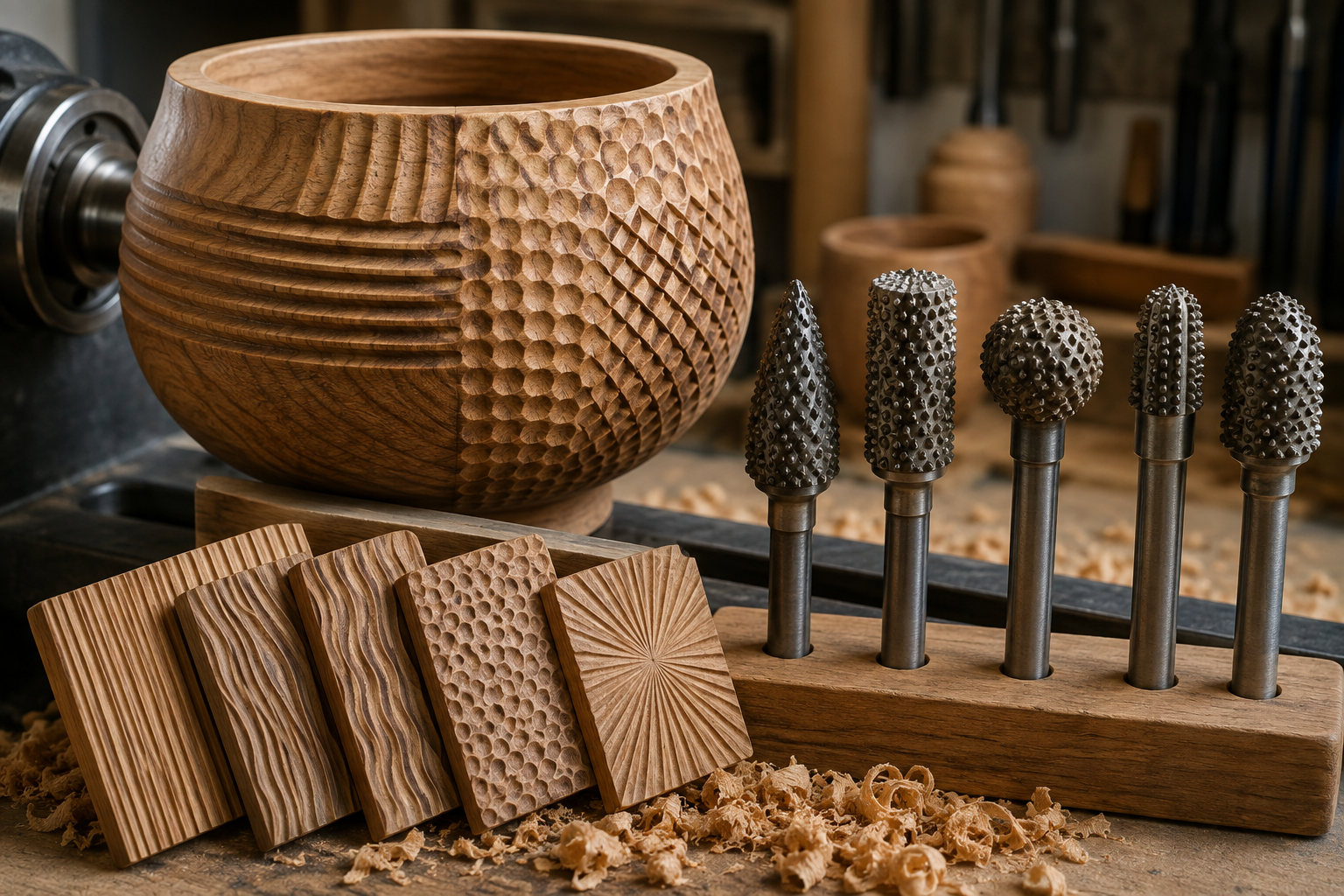
Woodturning allows makers to transform a piece of timber into bowls, vessels, handles, ornaments, and other shaped objects. While the basic turning process focuses on creating form, texture can add another layer of visual and tactile interest. Different cutting and shaping tools can create smooth surfaces, grooves, ridges, patterns, and other details. Choosing the right woodturning texture tools depends on the type of timber, the desired surface effect, the scale of the project, and the maker's experience. Understanding these factors can help turners work more deliberately and achieve consistent results.
What Are Woodturning Texture Tools?
Woodturning texture tools are designed to help create surface details on turned timber. Rather than simply removing large amounts of material to establish the basic shape, these tools can be used for controlled surface modification.
Texture can be created through repeated cuts, grooves, recesses, stippling, scraping, or other techniques. The exact effect depends on the tool's shape, cutting surface, speed, pressure, and movement.
Some tools are suited to relatively broad surface work, while others can be used for smaller decorative details. Understanding the intended application of each tool is important before using it on a finished piece.
Why Texture Matters in Woodturning
Texture can change how a turned object looks and feels. A smooth bowl, for example, may have a clean and understated appearance, while a textured section can create contrast and draw attention to a particular area.
Texture can also be used to emphasise the shape of an object. Circular grooves can follow the form of a vessel, while radial or directional patterns can create visual movement.
Choosing the Right Tool for the Timber
The type of wood being turned can influence tool selection. Hardwoods and softwoods behave differently under cutting pressure, and grain direction can affect the quality of a cut.
Dense hardwoods may require a tool capable of maintaining a clean cutting edge under repeated use. Softer woods may be easier to cut but can sometimes tear if the tool is not presented correctly.
When selecting woodturning texture tools, consider the material as well as the intended design. Testing a technique on a piece of scrap timber from the same species can help reveal how the wood will respond before working on the final project.
Common Types of Surface Effects
Turners can create many different effects depending on their technique. Grooves are among the simplest options and can be arranged in straight, curved, or repeating patterns.
Ridges can create a raised visual effect, while recessed textures can produce shadow and depth. Repeated cuts can create geometric patterns or more organic-looking surfaces.
Tool Control and Technique
Creating consistent texture requires control. The way a tool is held, positioned, and moved can influence the final result.
Cutting too aggressively may remove more material than intended and make it difficult to maintain a uniform pattern. Excessive pressure can also make controlled movement more difficult.
A steady approach is generally preferable. Turners should become familiar with the tool on scrap material before attempting intricate patterns on a finished piece.
Working at the Right Speed
Lathe speed can have a significant impact on surface texture. The appropriate speed depends on factors such as the diameter of the workpiece, type of wood, tool being used, and stage of the turning process.
Larger pieces generally require different speed considerations than small projects. Turners should follow the lathe manufacturer's recommendations and adjust settings appropriately for the workpiece.
Combining Texture With Finishing
Texture and finishing need to work together. A heavily textured surface may require a different finishing approach from a smooth, sanded surface.
Some finishes can highlight recesses and ridges by creating subtle changes in reflection across the surface. Other finishing methods may reduce the visual contrast between textured and smooth areas.
Conclusion
Texture can add depth, contrast, and character to turned timber when applied thoughtfully. For makers interested in decorating turned wood, experimenting with different surface patterns and combining textured areas with smooth sections can create distinctive pieces while allowing the natural characteristics of the timber to remain part of the design. Choosing appropriate woodturning texture tools, understanding the behaviour of different woods, maintaining proper tool control, and practising techniques can all contribute to better results.
 Never miss a story from us, get weekly updates in your inbox.