
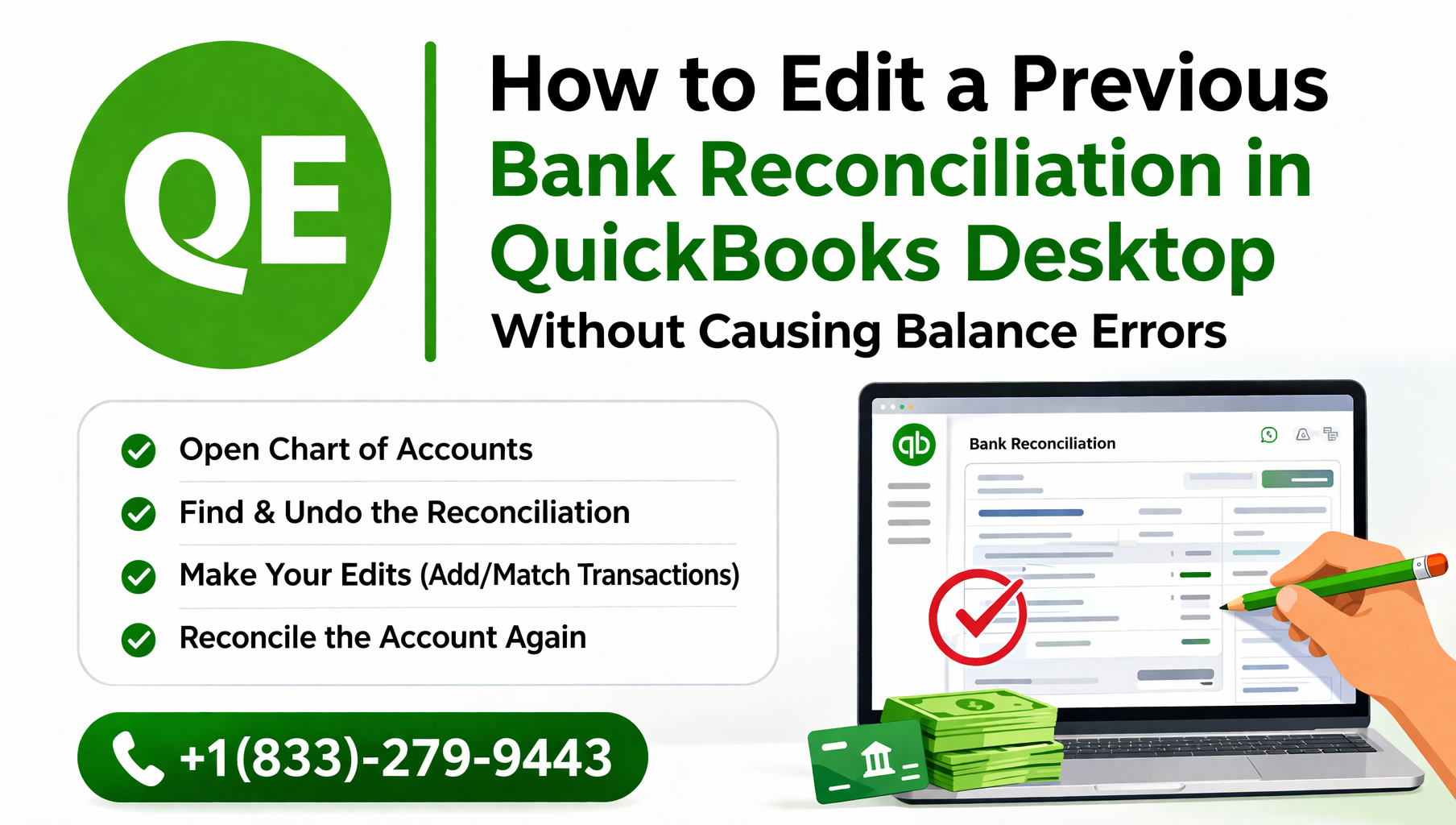
Accurate financial management is essential for every business, and QuickBooks Desktop offers powerful tools to help maintain well-organized records. One of the most critical accounting tasks is bank reconciliation, which ensures that your financial data matches your bank statement. However, errors may sometimes be discovered after reconciliation is complete, making users wonder how to fix them without disrupting their books. Understanding the right method is key to maintaining accuracy and avoiding discrepancies.
Understanding Bank Reconciliation in QuickBooks Desktop
Bank reconciliation is the process of matching your QuickBooks transactions with your bank statement to ensure everything is correct. Once completed, transactions are marked as reconciled, helping maintain consistency in reports. If a mistake such as an incorrect amount, duplicate entry, or missing transaction is identified later, you may need to go back and edit the reconciliation carefully.
Why Editing a Previous Reconciliation Can Cause Issues
Making changes to reconciled transactions can impact your opening balance, cleared totals, and future reconciliations. Even small edits can create a ripple effect if not handled correctly. This is why many users ask, How Do you edit a previous bank Reconcilation in Quickbooks Desktop without causing balance errors, as maintaining balance integrity is crucial for accurate financial reporting.
Common Scenarios That Require Editing
You may need to edit a previous reconciliation in situations such as:
Incorrect transaction amount
Duplicate entries
Missing bank fees or charges
Transactions marked incorrectly
Deleted or added entries after reconciliation
Each of these issues must be corrected carefully to avoid affecting your financial history.
Precautions Before Making Changes
Before editing a reconciliation, follow these important steps:
1. Backup Your Data
Always create a backup of your QuickBooks company file.
2. Review Reconciliation Reports
Check previous reports to identify which transactions need correction.
3. Note Statement Details
Keep a record of the statement date and ending balance.
4. Make Limited Changes
Avoid editing multiple transactions at once unless necessary.
Step-by-Step Process to Edit a Previous Reconciliation
Step 1: Open the Bank Register
Go to Lists > Chart of Accounts and select your bank account. Locate transactions marked with an “R.”
Step 2: Identify the Transaction
Find the specific transaction that needs correction and verify it with your bank statement.
Step 3: Edit the Transaction
Click on the transaction and update the necessary details such as amount, date, or description.
Step 4: Save Changes
After editing, the transaction may lose its reconciled status, which is normal.
Step 5: Reconcile Again
Go to Banking > Reconcile, enter the same statement details, and re-check the corrected transaction. Ensure the difference is zero before finishing.
Manually Undoing Reconciliation
QuickBooks Desktop does not offer a one-click undo option. Instead, you must manually unreconcile transactions:
Open the register
Change the status from “R” to blank or “C”
Save the changes
Reconcile the account again
This should be done carefully to avoid affecting multiple periods.
Tips to Avoid Balance Errors
To successfully manage How do you edit a previous bank reconciliation in QuickBooks Desktop without causing balance errors, follow these best practices:
Match all edits with your bank statement
Avoid deleting reconciled transactions
Make changes one at a time
Reconcile immediately after editing
Double-check your work before finalizing
Common Mistakes to Avoid
Avoid these common mistakes when editing reconciliations:
Editing multiple transactions at once
Ignoring discrepancy warnings
Changing reconciliation dates incorrectly
Skipping report reviews
These errors can lead to inaccurate balances and confusion.
QuickBooks Support for Assistance
Sometimes reconciliation issues can become complex, especially when multiple transactions or past periods are involved. In such cases, reaching out to QuickBooks support is a smart decision. Experts can guide you step by step, help identify discrepancies, and ensure your financial data remains accurate. If you are unsure about any step, you can contact support at +1(833)-279-9443 for reliable assistance and quick issue resolution.
Benefits of Editing Reconciliations Correctly
When handled properly, editing reconciliations helps you:
Maintain accurate financial records
Avoid discrepancies and reporting issues
Improve cash flow tracking
Keep your books organized
Advanced Tips for Better Reconciliation Management
For better results, consider these advanced tips:
Work with an accountant for older reconciliations
Use audit trails to track changes
Reconcile accounts regularly
Keep proper documentation for adjustments
Final Thoughts
Editing reconciled transactions requires a careful and methodical approach. By backing up your data, making precise edits, and re-reconciling immediately, you can maintain accurate financial records without creating discrepancies. If you still have concerns about How do you edit a previous bank reconciliation in QuickBooks Desktop without causing balance errors, taking expert guidance can help ensure your books remain balanced and error-free.
 Never miss a story from us, get weekly updates in your inbox.