
Introduction
Saudi Arabia’s industrial landscape is rapidly expanding with major developments in construction, manufacturing, energy, transportation, and infrastructure. As businesses continue to increase operational activities, ensuring worker protection during elevated tasks has become an essential part of workplace safety management.
Working at height involves several risks, including falls from rooftops, platforms, and industrial structures. A properly designed Safety lifeline provides an effective method to improve worker protection by maintaining a secure connection between employees and approved anchorage points during elevated operations.
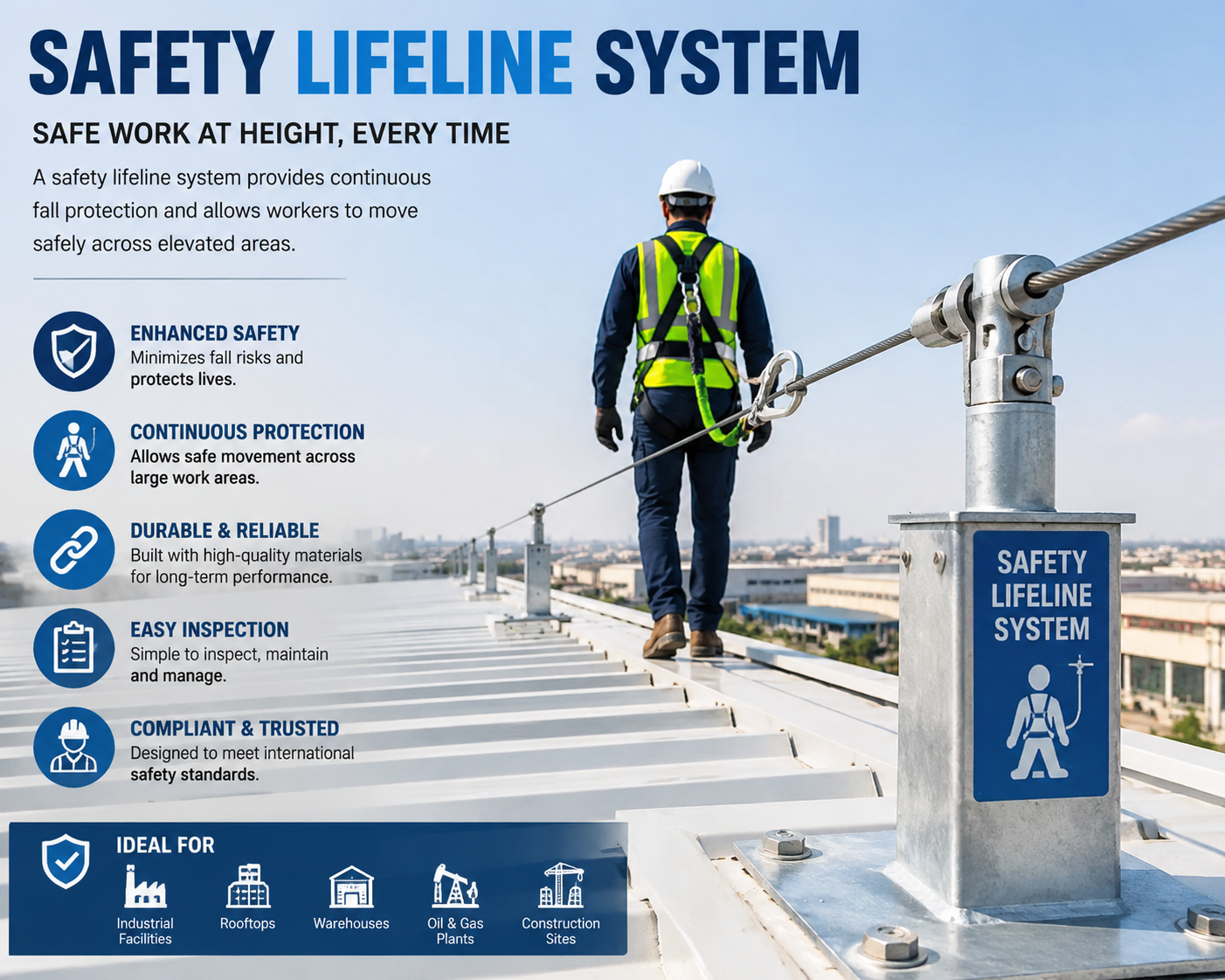.png)
What Makes Safety Lifeline Systems Essential?
A safety lifeline system is a fall-protection solution designed to support workers who perform activities in elevated areas. It enables workers to move along designated work zones while staying connected to a reliable safety arrangement.
Unlike basic protective equipment that only provides limited coverage, lifeline systems are designed for continuous protection. They allow workers to complete inspection, repair, and maintenance activities with greater mobility while reducing exposure to fall hazards.
In Saudi Arabia, these systems are becoming increasingly important across industries where regular access to elevated areas is required.
Common Applications Across Saudi Arabian Industries
Safety lifeline systems have become an important part of workplace safety planning across Saudi Arabia due to the increasing demand for secure work-at-height solutions. Different industries face unique challenges depending on their operating environment, equipment layout, and maintenance requirements. A properly designed lifeline system helps workers perform elevated tasks while maintaining continuous connection and reducing exposure to fall hazards.
Construction and Infrastructure
The construction sector is one of the largest users of work-at-height safety systems. Workers involved in building structures, steel installation, roofing activities, and infrastructure projects often operate on elevated surfaces where the risk of falls is higher.
Oil and Gas Facilities
Saudi Arabia’s oil and gas industry requires strict safety practices due to the complex nature of operations and the presence of elevated equipment, processing units, storage facilities, and maintenance areas.
Industrial Manufacturing
Manufacturing facilities often include machinery, production lines, storage areas, and elevated maintenance zones that require regular inspection and servicing.
Workers may need to access overhead equipment, factory roofs, ventilation systems, cranes, or technical installations. Without proper fall protection, these activities can create significant safety risks.
Warehousing and Logistics
Modern warehouses and logistics facilities frequently require rooftop access for inspection, HVAC maintenance, solar panel servicing, and building repairs.
Large warehouse structures often have wide roof areas where workers need freedom of movement. Installing suitable lifeline systems allows employees to perform necessary tasks without relying only on temporary safety measures.
Benefits of Implementing a Safety Lifeline System
A properly planned lifeline solution provides multiple safety and operational advantages for industries working at height.
Enhanced Worker Protection
The primary purpose of a safety lifeline is to reduce the consequences of fall hazards by keeping workers connected to a secure system. When used with appropriate harnesses and fall-arrest equipment, it creates an additional layer of protection during elevated activities.
This continuous connection helps protect employees when they are moving, positioning themselves, or performing maintenance tasks in areas where traditional barriers may not be practical.
Increased Mobility
One major advantage of modern lifeline systems is that they allow workers to move across larger work areas without repeatedly disconnecting from their safety equipment.
This improves efficiency because employees can complete inspections, repairs, and maintenance tasks while maintaining proper safety practices. Better mobility also reduces unsafe behaviors that may occur when workers try to save time during elevated operations.
Key Factors for Effective Installation
Before installing a lifeline system, organizations should evaluate:
- Structural capacity of the installation surface
- Type of work being performed
- Required movement range
- Fall clearance availability
- Environmental conditions such as heat, dust, and corrosion
- Worker training and emergency response procedures
Regular inspection and maintenance are also necessary to ensure the system continues to perform effectively.
Future of Work-at-Height Safety in Saudi Arabia
With continued growth in industrial projects and infrastructure development, demand for advanced safety solutions is expected to increase. Organizations are focusing more on preventive safety measures that protect workers while improving operational efficiency.
A professionally planned Safety lifeline system supports this approach by creating safer working conditions and reducing risks associated with elevated tasks.
Conclusion
Workplace safety is a critical priority for Saudi Arabia’s industrial sectors. As work-at-height activities continue to increase, reliable fall-protection solutions are essential for protecting employees and maintaining efficient operations.
A properly selected and maintained Safety lifeline helps organizations create safer environments through continuous protection, improved mobility, and effective risk management. By combining suitable equipment, worker awareness, and regular safety practices, industries can achieve stronger safety standards across the Kingdom.
 Never miss a story from us, get weekly updates in your inbox.