

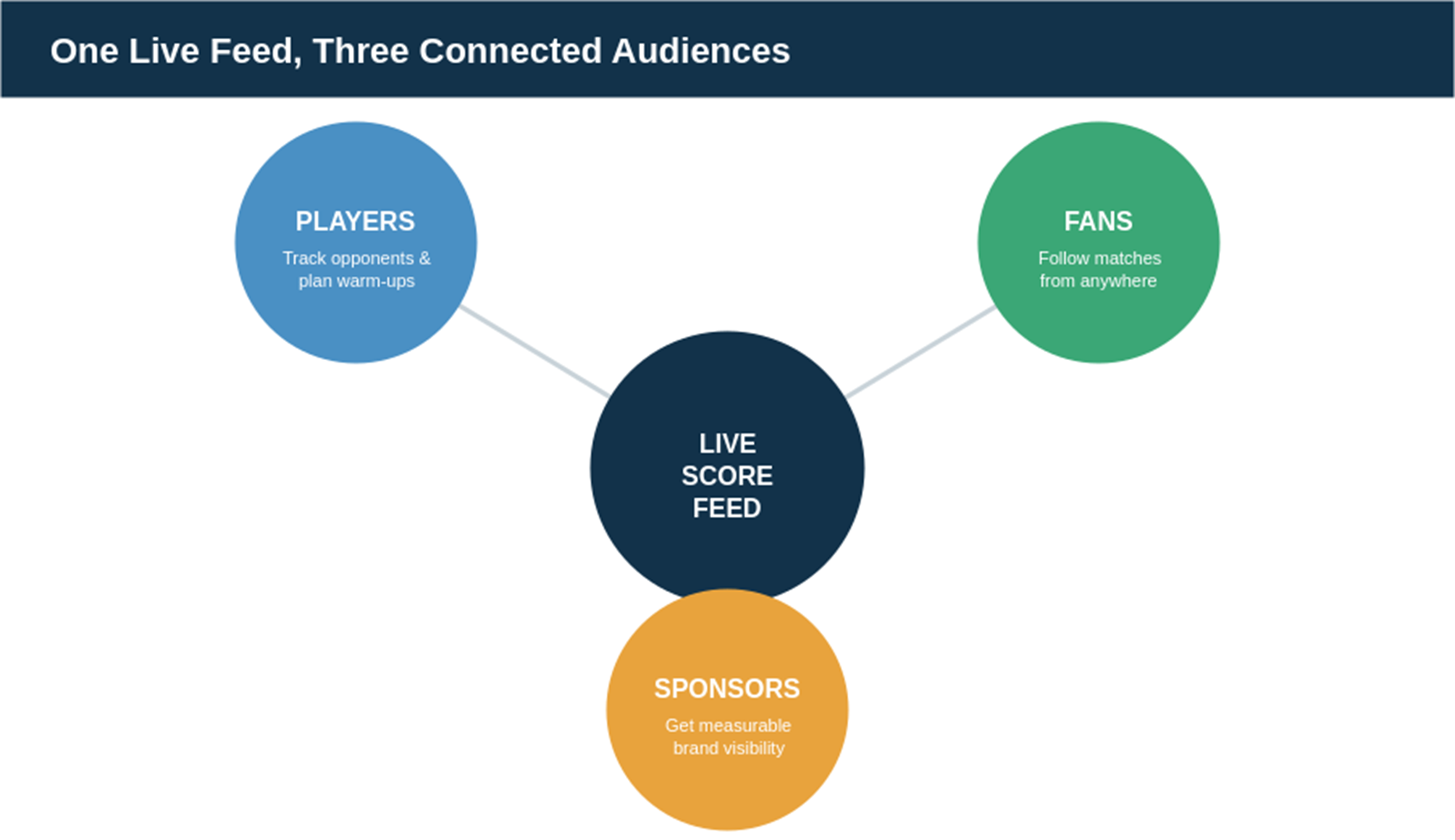
One live feed, three very different audiences, all watching the same match unfold
A tennis tournament has always had three separate audiences watching the same event for different reasons — the players competing, the fans following along, and the sponsors funding it. What's changed is that all three used to rely on completely different, disconnected sources of information. Live score tracking has quietly closed that gap, turning one simple data feed into the connective thread that keeps everyone in sync.
Before this shift, a player's family, a casual fan, and a tournament sponsor might all have had a completely different picture of how an event was going — one relying on a phone call, another on a printed sheet, and a third on nothing at all until results were posted days later. A single live feed removes that disconnect entirely.
Players: Playing Smarter, Not Just Harder
For competitors, live scores aren't about entertainment — they're a planning tool. A player waiting for their next match can track exactly how far along an earlier match is and time their warm-up accordingly, instead of guessing or hovering near the court. Coaches managing more than one athlete across different courts get the same advantage, following two matches at once from a single screen.
This matters even more in draws with tight turnaround times between rounds, where a five-minute miscalculation can mean arriving at the court underprepared, or missing a warm-up window entirely because an earlier match finished faster than expected.
Fans: Following Without Being There
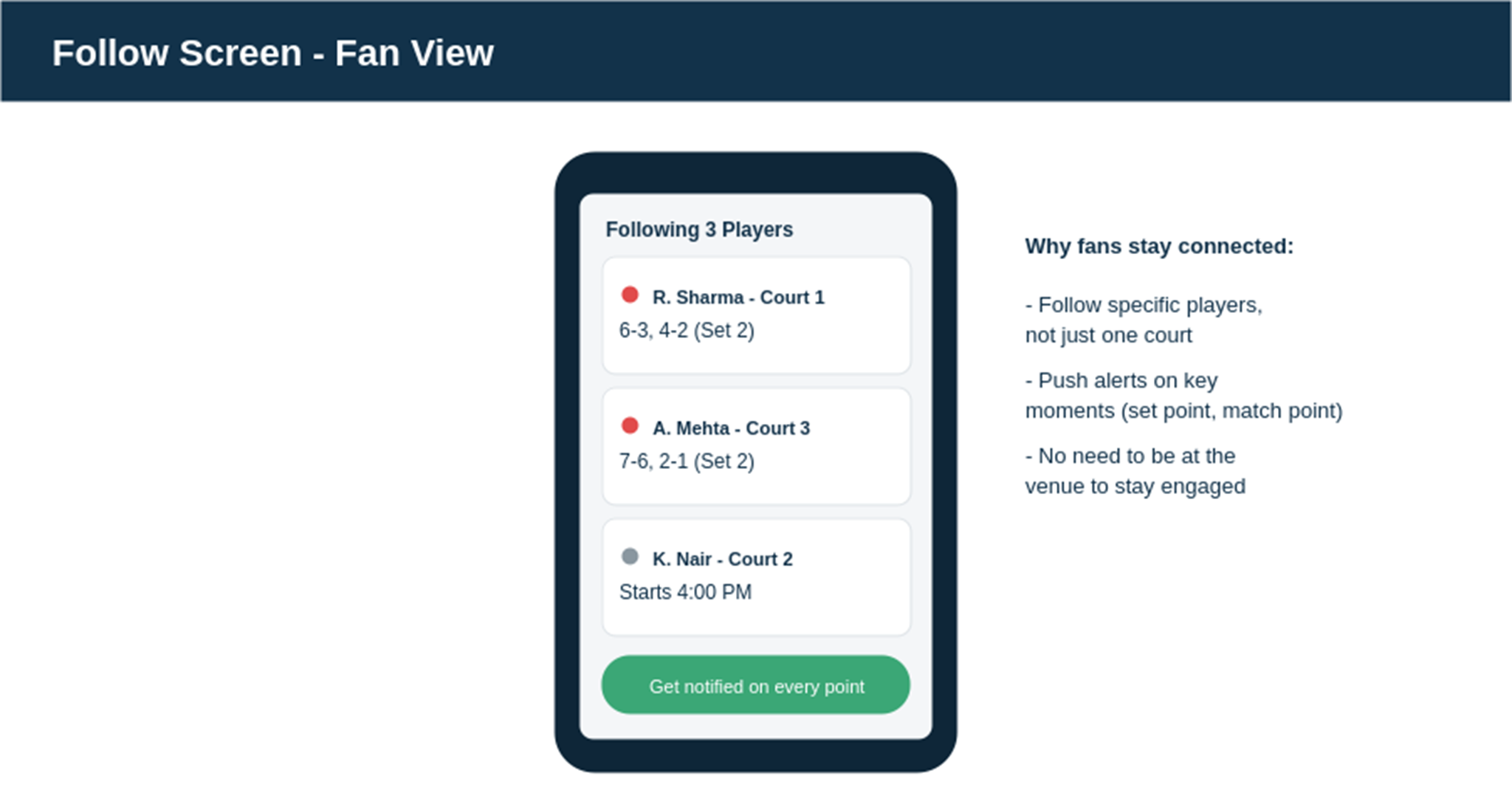
Fans and parents are often the biggest beneficiaries of live tennis scoring, simply because they're rarely able to watch every match in person. A parent at work can check how their child's doubles match is progressing. A friend following a player's tournament run doesn't need to be courtside to feel connected to the result as it happens.
This is especially valuable across multi-day events, where the matches people care most about don't always land on a weekend or a convenient viewing time. Live scores make it possible to stay engaged with a tournament's full arc, not just the moments someone happened to be free to watch.
Sponsors: Visibility That Can Be Measured
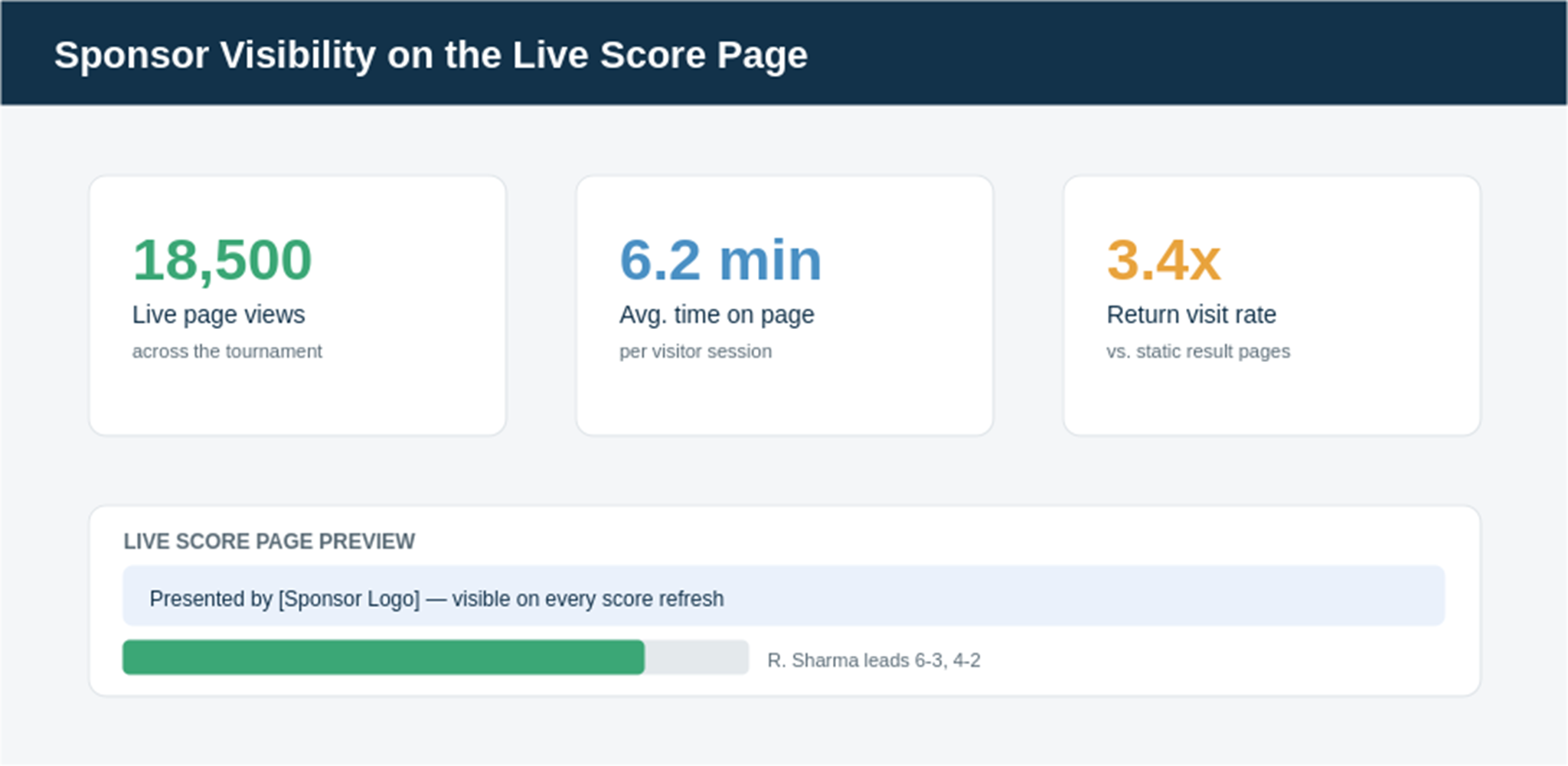
Sponsors have historically had to take an organizer's word for how much visibility their brand actually received. A live score page changes that conversation entirely. Every score refresh is an impression, every returning visitor is a data point, and every session becomes something a sponsor can actually report back to their own stakeholders.
That kind of measurable engagement is far more persuasive when renewal conversations come around, since organizers can show actual numbers instead of asking sponsors to take visibility on faith year after year.
Why the Connection Matters More Than the Feature
It's tempting to think of live scoring as just a convenience feature, but its real value is relational. It gives three groups with very different needs a shared, real-time reference point — something that used to only exist for major broadcast events now works just as well for a weekend club tournament.
This is exactly the direction Indian tennis tournament management platforms have been moving. Tenniskhelo integrates live scoring directly into its tournament management system, giving organizers a way to keep players, fans, and sponsors on the same page without running a separate broadcast operation.
Final Thoughts
A live score feed looks simple from the outside — numbers updating on a screen. But underneath, it's doing something more important: keeping three very different audiences, with three very different reasons for caring, connected to the same match at the same time. As real-time tournament scoring becomes standard practice, that shared connection is quickly becoming one of the most valuable things a tournament can offer everyone involved.
 Never miss a story from us, get weekly updates in your inbox.