
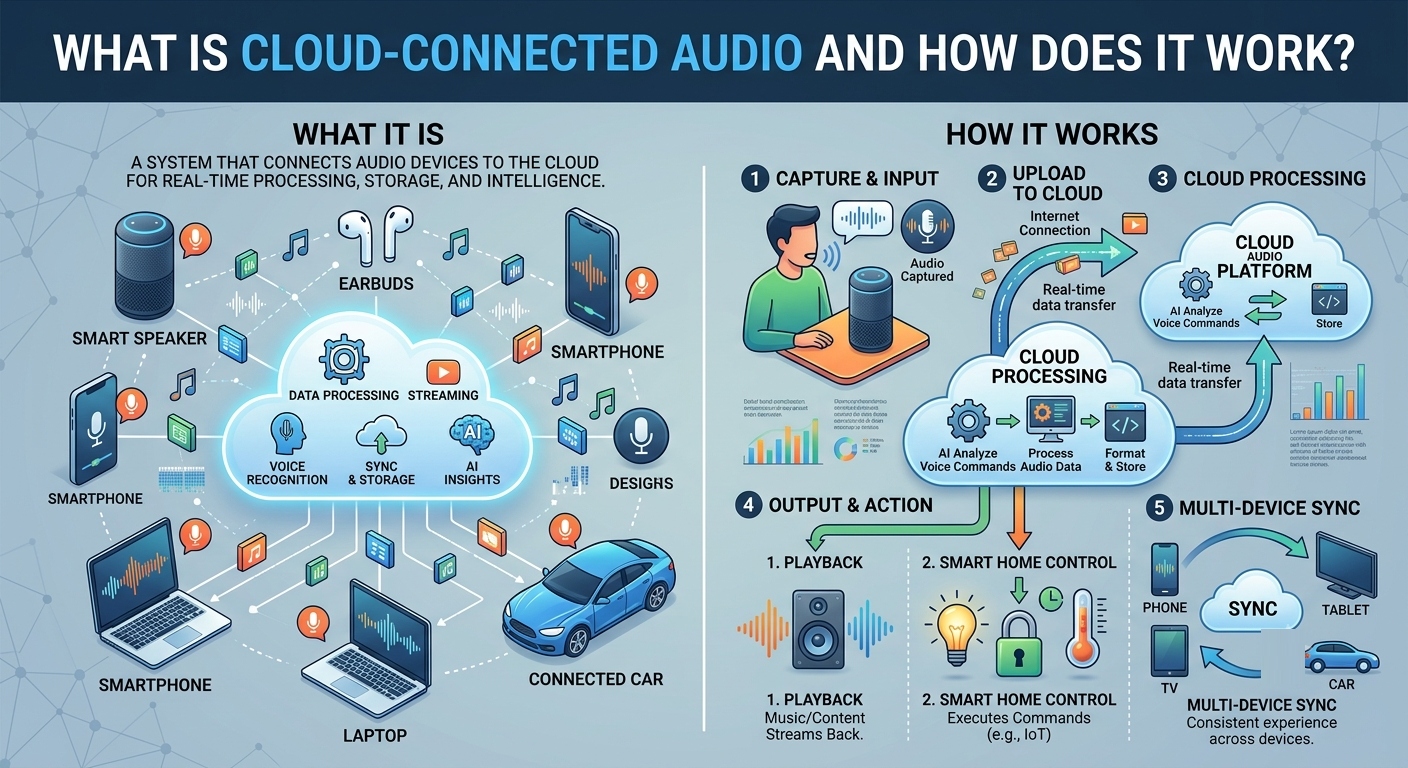
Remember when a "sound system" just meant speakers wired to an amplifier in a corner of the room? Those days are fading fast. Homes, offices, retail stores, and even entire smart cities are now running on something far smarter: Cloud Connected Audio. It's quietly become one of the most talked-about shifts in the audio industry, and if you've been hearing the term pop up everywhere lately, you're not imagining things - it's genuinely trending, and for good reason.
In this guide, we'll break down what Cloud Connected Audio actually means, how it works under the hood, and why businesses and homeowners alike are making the switch to a cloud-based audio system. We'll also look at why security matters so much in this space, and how a secure cloud connected audio system is changing the way we think about sound management altogether.
What Is Cloud Connected Audio?
At its core, Cloud Connected Audio refers to an audio setup where speakers, amplifiers, and control devices are linked together and managed through the cloud, rather than relying purely on local wiring or on-site hardware. Instead of controlling your sound system from a single physical panel in one room, you can manage playback, volume, zones, and settings from anywhere - a smartphone app, a web dashboard, or even voice commands - as long as you have an internet connection.
Think of it like the difference between storing photos on a single hard drive versus saving them on Google Drive. With traditional audio, everything lives locally. With Cloud Connected Audio, your system's brain lives in the cloud, syncing data in real time and giving you remote access, updates, and control that old-school setups simply can't match.
This shift isn't just a convenience upgrade - it's a completely different way of thinking about audio infrastructure.
How Does a Cloud-Based Audio System Actually Work?
Understanding the mechanics helps make sense of why this technology is spreading so quickly across homes, retail chains, restaurants, gyms, and corporate offices. Here's a simplified breakdown of how a cloud-based audio system functions:
1. Connected Hardware
Smart speakers, amplifiers, and audio controllers are equipped with Wi-Fi or Ethernet connectivity. Instead of only receiving signals from a local source, these devices constantly communicate with a central cloud server.
2. Cloud Server as the Control Hub
The cloud server acts as the command center. It stores playlists, schedules, zone configurations, and user preferences. When you make a change - say, adjusting volume in the lobby versus the break room - that instruction travels through the cloud and reaches the correct device almost instantly.
3. Mobile App or Web Dashboard
Most systems come with an intuitive app or browser-based dashboard. This is where users control everything: creating audio zones, scheduling background music, adjusting equalizer settings, or pushing emergency announcements across multiple locations at once.
4. Real-Time Syncing and Updates
Because everything runs through the cloud, firmware updates, new features, and bug fixes can be rolled out remotely without needing a technician to physically visit every speaker or amplifier.
5. Multi-Location Management
This is where Cloud Connected Audio truly shines for businesses. A retail brand with fifty stores can manage background music, promotional audio, and announcements across every single location from one centralized dashboard - no on-site staff required.
Why Is Cloud Connected Audio Becoming So Popular?
A few years ago, this kind of setup was mostly limited to large enterprises with big budgets. Today, it's becoming mainstream, and the reasons are pretty relatable.
Remote accessibility tops the list. Nobody wants to physically walk to a control panel anymore. People expect to manage things from their phones, and audio is no exception.
Scalability is another major driver. Whether you're adding a new speaker to your living room or opening a tenth restaurant location, a cloud-based setup scales without the tangled mess of new wiring or hardware overhauls.
Smart automation also plays a huge role. Systems can now automatically adjust volume based on time of day, trigger specific playlists for store hours, or sync with smart home ecosystems like Alexa or Google Home.
Data-driven insights are increasingly valuable too. Businesses can track which playlists perform best, monitor system uptime, and even use audio analytics to enhance customer experience.
Why Security Matters: The Rise of Secure Cloud Connected Audio Systems
Here's the thing about connecting audio devices to the internet - it opens the door to convenience, but it also raises valid concerns about privacy and cybersecurity. Nobody wants their office speakers hacked or their smart home audio system exploited as an entry point into their network.
This is exactly why the demand for a secure cloud connected audio system has grown so quickly. Reputable providers now build their platforms with:
End-to-end encryption for data transmitted between devices and the cloud
Multi-factor authentication for user accounts and dashboards
Regular firmware patching to close security gaps before they become problems
Role-based access controls, so only authorized personnel can modify settings across locations
Network segmentation, keeping audio traffic isolated from other sensitive business systems
A truly secure system doesn't just protect the audio experience - it protects the broader network the devices are connected to. This is especially critical for businesses handling customer data alongside their audio infrastructure, like retail stores or hospitality venues.
Real-World Applications of Cloud Connected Audio
It's easy to talk about this in the abstract, but the real value shows up in everyday use cases:
Retail stores use it to sync background music across branches while pushing real-time promotional announcements during sales events.
Restaurants and cafes rely on it to set the right ambiance throughout the day - upbeat music during lunch rushes, calmer tones in the evening - all scheduled automatically.
Corporate offices use cloud audio for paging systems, meeting room announcements, and emergency alerts that need to reach every floor instantly.
Smart homes benefit from multi-room audio that adjusts based on occupancy, time of day, or voice commands, all without a single visible wire.
Gyms and fitness studios use it to sync high-energy playlists across multiple rooms while allowing instructors to control volume from their own devices.
Getting Started: What to Look For
If you're considering upgrading to Cloud Connected Audio, keep a few things in mind. Look for platforms that offer flexible scalability, intuitive app control, and - most importantly - strong security credentials. Ask providers directly about their encryption standards and how often they release security updates. A system that sounds great but leaves your network exposed isn't a good trade-off.
It's also worth checking whether the platform supports integration with your existing smart devices, since compatibility can save a lot of future headaches.
Conclusion
Cloud Connected Audio isn't just a passing trend - it represents a genuine shift in how we think about sound management, whether at home or across an entire business network. A well-built cloud-based audio system offers flexibility, remote control, and smart automation that traditional setups simply cannot compete with. And as adoption grows, the emphasis on building a secure cloud connected audio system will only become more important, ensuring convenience never comes at the cost of safety.
As more homes and businesses make the switch, one thing is clear: the future of audio is not just smart, it's cloud-connected.
Frequently Asked Questions
1. What is Cloud Connected Audio in simple terms?
It's an audio setup where speakers and amplifiers connect to the internet and are managed through a cloud server, allowing users to control sound remotely via an app or dashboard instead of a physical panel.
2. Is a cloud-based audio system difficult to install?
Not really. Most modern systems are designed for straightforward setup, often requiring just a Wi-Fi connection and a few minutes through a companion app, without complex wiring.
3. How is a secure cloud connected audio system different from a regular one?
A secure system includes protections like encryption, multi-factor authentication, and regular firmware updates to prevent unauthorized access, whereas a basic system may lack these safeguards.
4. Can Cloud Connected Audio work without internet access?
Most features rely on an internet connection for remote control and syncing. However, many systems include local fallback modes so basic playback continues even during brief outages.
5. Is Cloud Connected Audio suitable for small businesses, or only large enterprises?
It works well for both. Small businesses benefit from easy scalability and remote management, while enterprises gain the ability to control audio across dozens or hundreds of locations from one platform.
 Never miss a story from us, get weekly updates in your inbox.