
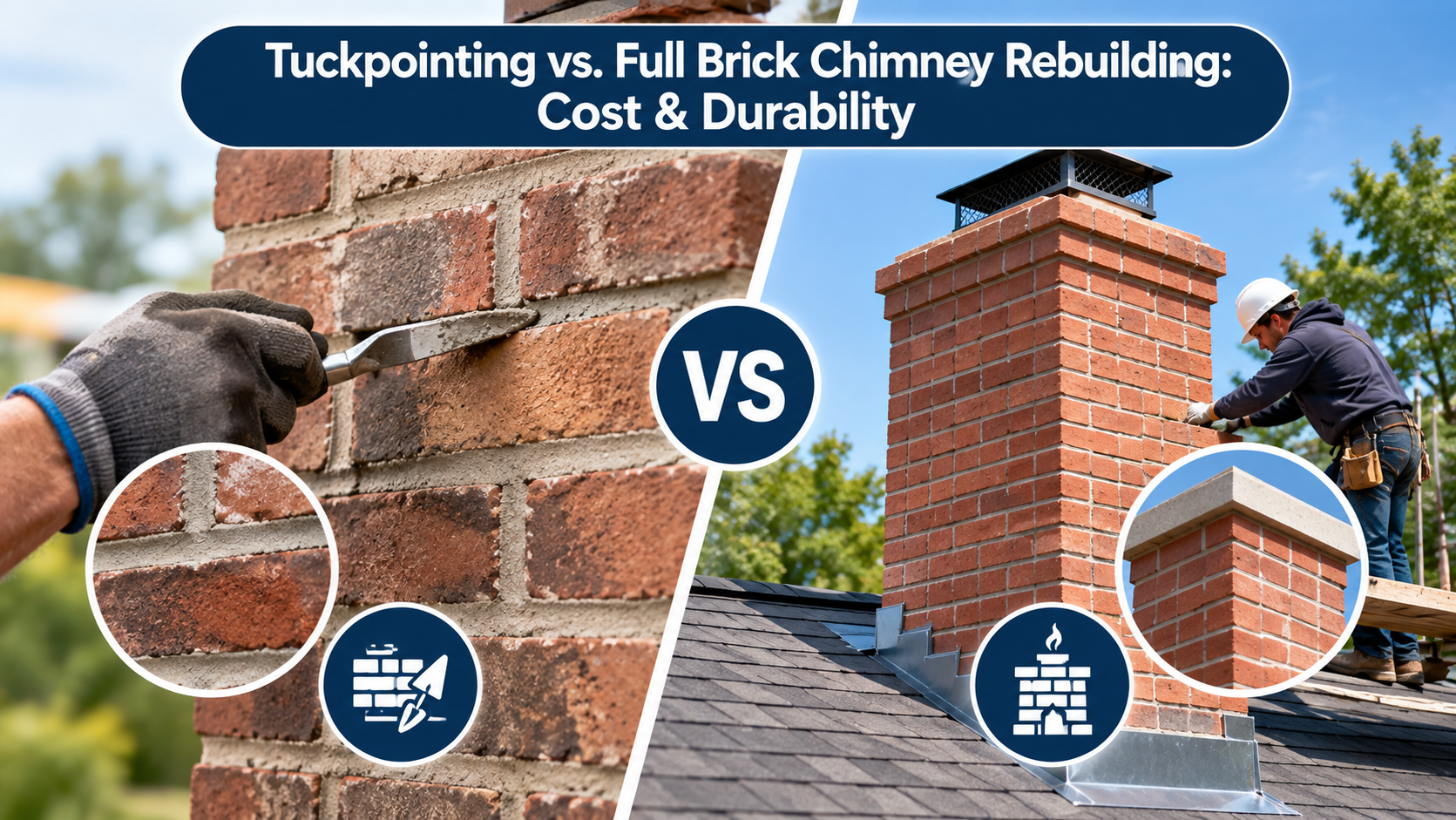
Brick chimneys are built to last, but years of exposure to rain, heat, moisture, and changing temperatures can eventually damage the masonry. One of the first areas to show wear is often the mortar between the bricks. If the problem is caught early, tuckpointing may restore the chimney without removing large sections of masonry. When the damage has spread to the bricks or affected the stability of the chimney, a full rebuild may be necessary.
Choosing between tuckpointing and rebuilding is not simply a matter of comparing prices. The right repair depends on how much of the chimney has deteriorated, whether the bricks remain sound, and whether the structure is still stable.
What Is Chimney Tuckpointing?
Tuckpointing is a masonry repair method that focuses on deteriorated mortar joints. The damaged mortar is carefully removed and replaced with fresh mortar that is appropriate for the existing brickwork.
The goal is to restore the joints without removing the surrounding bricks.
Tuckpointing can be a good option when:
- Mortar is cracked, recessed, or crumbling
- Bricks remain solid and properly positioned
- Damage is mostly limited to the joints
- The chimney remains straight and stable
- Water has not caused widespread structural deterioration
Proper tuckpointing does more than improve the appearance of a chimney. Deteriorated mortar can allow water to penetrate deeper into the masonry. Over time, moisture can contribute to additional deterioration of both mortar and brick. CSIA notes that defective mortar joints and improper masonry materials can increase water absorption within a masonry chimney.
What Is a Full Brick Chimney Rebuild?
A full rebuild is a much more extensive project. Instead of repairing individual mortar joints, damaged sections of the chimney are dismantled and reconstructed using new masonry materials.
Depending on the condition of the chimney, the rebuilding may involve only the section above the roofline or a much larger portion of the structure.
A rebuild may be considered when:
- Bricks are extensively cracked or spalling
- Multiple sections of masonry are failing
- The chimney is leaning or visibly unstable
- Large sections have shifted or separated
- Water damage has affected the structure extensively
- Previous repairs have failed repeatedly
- The chimney cannot be made structurally sound through localized repairs
A chimney fire can also reveal damage that cannot be safely addressed with simple mortar repairs. CSIA explains that chimney-fire damage can include joint failure and structural cracking, and that some situations may require an entire chimney rebuild.
Tuckpointing vs. Rebuilding: The Main Difference
The simplest way to understand the difference is to look at what has failed.
If the bricks are still strong but the mortar between them has deteriorated, tuckpointing may be enough.
If the bricks themselves are damaged, displaced, or part of an unstable structure, rebuilding becomes a more appropriate solution.
Tuckpointing preserves most of the existing chimney. A rebuild replaces the failed masonry and gives the structure a new foundation of brick and mortar in the affected area.
This distinction is important because applying new mortar over seriously damaged masonry does not solve the underlying structural problem.
Cost Comparison
Tuckpointing is generally less expensive than a full chimney rebuild because it requires less demolition, fewer new materials, and less reconstruction.
Current cost guides put typical tuckpointing projects in a broad range depending on the size, height, accessibility, mortar condition, and complexity of the masonry. Chimney work can cost more than ordinary wall tuckpointing because working at roof level may require scaffolding, additional safety equipment, and more labor.
A full chimney rebuild costs considerably more because the project can involve:
- Demolition and removal of damaged masonry
- Disposal of old brick and mortar
- New bricks and mortar
- Reconstruction of the affected chimney section
- Scaffolding and roof protection
- Additional flashing or crown work
- Possible liner or flue repairs
- More labor and project time
Cost estimates vary significantly from one chimney to another. A small rebuild above the roofline is very different from rebuilding a chimney through multiple floors of a home.
For that reason, homeowners should be cautious about choosing a repair based on a generic price range alone.
Which Option Offers Better Durability?
Both repairs can be durable when they are appropriate for the condition of the chimney.
Tuckpointing can provide many additional years of service when the underlying bricks remain sound and the source of moisture is addressed. However, simply replacing mortar does not correct problems such as a leaking chimney crown, defective flashing, or other sources of water intrusion.
This is why identifying the cause of deterioration matters as much as repairing the visible damage.
A full rebuild generally provides greater long-term value when the existing masonry has already lost its structural integrity. Rebuilding removes severely deteriorated components rather than trying to preserve materials that are no longer reliable.
However, rebuilding a chimney that only has minor mortar deterioration would be unnecessary and significantly more expensive.
Signs Tuckpointing May Be Enough
Homeowners may be dealing primarily with mortar deterioration when they notice:
- Small cracks along mortar joints
- Mortar that is becoming soft or sandy
- Joints that have recessed from the brick face
- Small areas of missing mortar
- Minor water-related staining
- Bricks that remain firm and intact
These signs do not automatically mean tuckpointing is the correct repair, but they can indicate that the damage is still localized.
Early attention can also help prevent water from reaching deeper parts of the masonry.
Signs a Rebuild May Be Necessary
More serious warning signs include:
- Large numbers of cracked or spalling bricks
- Bricks that are loose or moving
- A chimney that is leaning
- Bowing or bulging masonry
- Large cracks running through multiple courses
- Sections of masonry pulling away from the chimney
- Significant deterioration around the roofline
- Evidence of major structural movement
A chimney with these conditions should be professionally evaluated rather than covered with a cosmetic mortar repair.
A Level 2 chimney inspection, for example, includes examination of accessible areas and the chimney's overall construction and condition. CSIA inspection guidance also calls for attention to areas such as the crown, flashing, attic clearances, and signs of water entry.
Why Moisture Control Matters
Water is one of the biggest threats to brick masonry.
A chimney can develop damaged mortar because of years of moisture exposure. If the source of that moisture is not corrected, newly repaired joints may deteriorate again.
Common areas that deserve attention include the chimney crown, flashing, cap, and exposed masonry.
CSIA notes that defective mortar joints can increase water penetration into masonry chimneys and recommends regular inspection and preventative maintenance.
This means a good repair should address both the visible damage and the reason it developed.
Which Repair Is More Cost-Effective?
Tuckpointing is usually the better financial choice when the chimney is structurally sound and the problem is limited to mortar deterioration.
A rebuild becomes more cost-effective when the chimney has extensive structural damage. Continuing to patch a seriously deteriorated chimney can lead to repeated repair costs without addressing the underlying failure.
The cheapest repair today is not always the least expensive option over the long term.
For example, rebuilding may seem expensive compared with repairing several damaged joints. But if the surrounding bricks are already failing, repeated tuckpointing may only postpone a larger reconstruction project.
On the other hand, rebuilding a structurally sound chimney simply because some mortar joints have deteriorated can waste money that could have been spent on targeted repairs and preventative maintenance.
How to Make the Right Decision
The best approach is to have the chimney evaluated before choosing the repair method.
A professional should look at:
- Condition of the mortar joints
- Brick condition
- Chimney alignment
- Evidence of water intrusion
- Crown and flashing condition
- Extent of masonry deterioration
- Interior flue condition
- Previous repairs
- Overall structural stability
Photos can also be useful when documenting areas of damage, particularly when a chimney has experienced a fire or significant structural problem. CSIA recommends professional evaluation before continued use when chimney-fire damage is suspected.
For homeowners in the Dallas–Fort Worth area, ALC Chimney Service can help evaluate masonry deterioration and determine whether targeted tuckpointing or more extensive chimney repair is appropriate.
Final Thoughts
Tuckpointing and full chimney rebuilding serve two very different purposes.
Tuckpointing is designed to preserve a structurally sound chimney by replacing deteriorated mortar joints. It can be a practical and cost-effective solution when brickwork remains strong.
A full rebuild is more appropriate when the masonry has suffered widespread deterioration, structural movement, extensive brick damage, or other problems that cannot be corrected through localized repairs.
The most important factor is not choosing the cheaper option. It is choosing the repair that matches the actual condition of the chimney. Early professional evaluation can help prevent minor mortar deterioration from developing into a much more expensive structural problem.
 Never miss a story from us, get weekly updates in your inbox.